

Someone once told me that healthy people have numerous problems they want to solve but a chronically unwell person has just one. I sadly understand this all too well.
I was once bedridden for the majority of a year and suffered from a barrage of debilitating physical symptoms for five years after a nervous system injury caused by prescribed benzodiazepines. I was gaslit by numerous doctors who didn’t understand my condition, which left me unable to trust most “medical professionals” – especially as they were the ones who essentially made me so unwell for so long.
Now, I’m on the other side, having gone through pregnancy and motherhood feeling great in my body again, I’m starting to trust certain doctors. There are some great ones out there and amidst the numerous iatrogenic (doctor caused) illnesses ruining lives, modern medicine can be lifesaving, God Bless (some of!) our NHS!. But after all I went through, I’ve learnt that it’s really important to take responsibility for your own health and that knowledge really is power.
I once had some bloods done at my local NHS doctor’s practice and asked if a doctor could call me to give their professional explanation. When he called and I asked what my results meant he laughed and said he “didn’t know.” In his defence it was quite an advanced fertility marker I had researched before my pregnancy but then and there I realised I needed more medical support, I told the chuckling GP that I wanted not just to survive, but to thrive. Then he chuckled some more.
I also craved a drug-free, natural birth, but when it was all happening, I was immensely grateful for the medical care I received – and that magical epidural. I’m not sure why I thought I could handle the pain of an unmedicated birth when I used to run out mid-bikini wax with a ludicrously lopsided result.
Sometimes we can do “everything right,” which is becoming increasingly hard in the toxic world we live in, and still get sick – but there is so much we can do to improve our metabolic health, prevent disease and feel great in our bodies – which is really important for my fun-loving, FOMO ridden self. After years of feeling too unwell to leave the house, I don’t ever want to suffer like that again.
Improving and maintaining my metabolic health to functional medicine levels is not about living forever, it’s about living your best life in a body that feels as good as it can. It’s about having the energy to chase my toddler around in my 40’s and increasing the chances of living long enough to be there for him as long as possible in this big, bad, beautiful world.
True wealth is health, it’s the ability to maintain youthful energy, mental sharpness, metabolic resilience and physical vitality deep into later life. In an era where chronic disease has become normalised, the greatest luxury is not simply living longer, but living exceptionally well armed with knowledge and evidence based science – which is why I love attending The Health Optimisation Summit every year.
Recently, after a frolicsome summer of merriment, I decided to undertake what can only be described as a forensic audit of my future self.
Using a comprehensive longevity blood panel from London Blood Tests, coupled with an advanced DNA analysis from Stride, I set out to understand not only where I stand today, but how my genetics and lifestyle are interacting beneath the surface.
I discovered a highly resilient metabolic foundation, a remarkable example of lifestyle overriding genetic vulnerabilities, and several hidden biochemical bottlenecks that would never have been uncovered through standard NHS medical testing alone.
Most importantly, I learned that personalised health is not about following fashionable wellness trends or blindly taking a plethora of supplements you heard about on Instagram without knowing what’s going on in your own body first. We are all unique, and deserve a more bespoke approach to optimum health – this is what real health optimisation is all about.
The New Luxury House Call
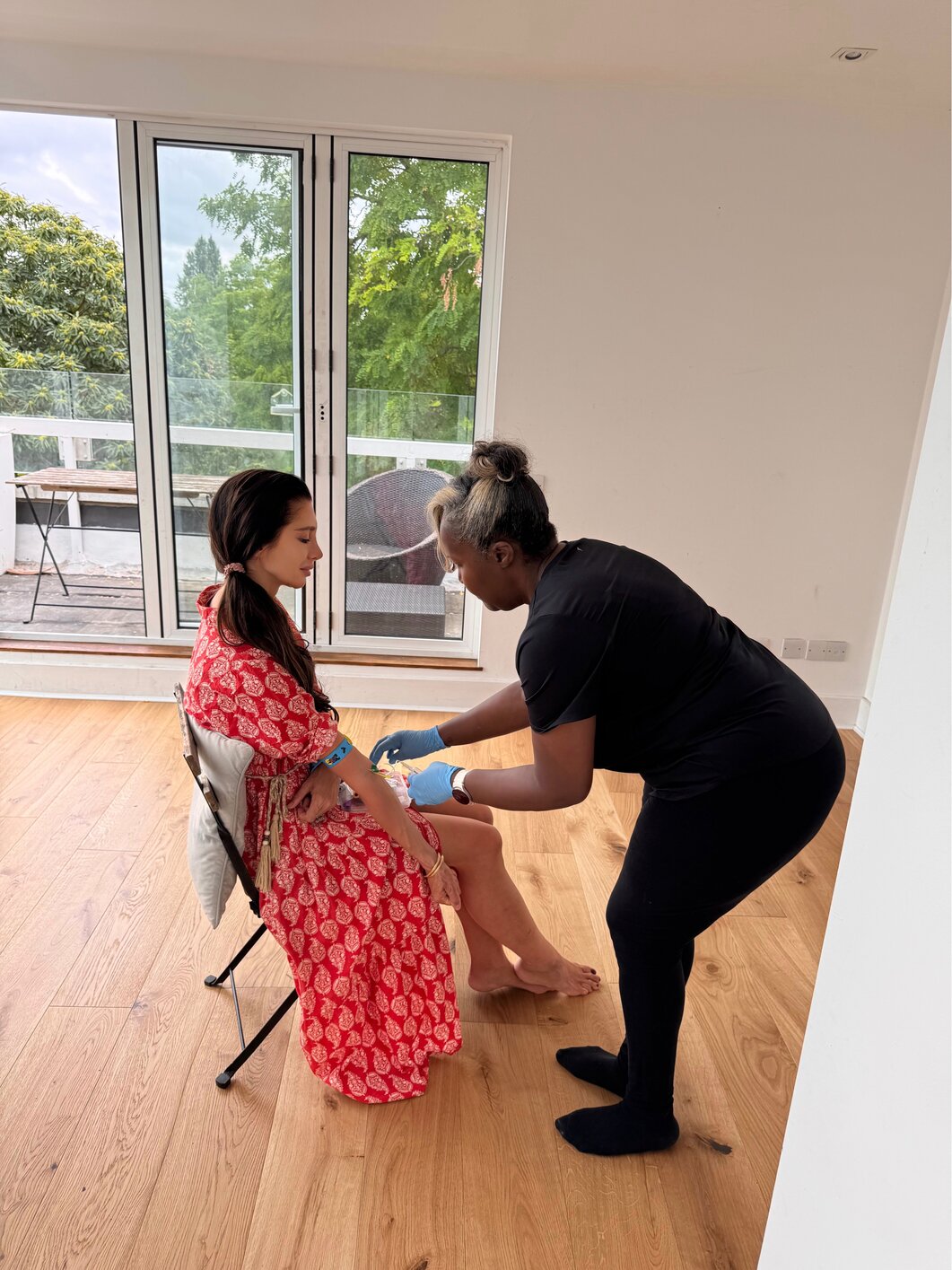
One of the greatest advantages of modern preventative medicine is convenience. Both my wife Sam and I used London Blood Tests, whose friendly phlebotomy team came directly to our home to collect our samples. The experience felt refreshingly modern and stress free – even though the lab courier turned up earlier than expected and patiently waited in the hallway for us to finish our blood draws.
Rather than spending hours travelling to a clinic (ain’t no body go time for that) across London, and waiting in reception with an excitable toddler, a highly trained phlebotomist arrived at our door and completed an extensive longevity-focused blood draw from the comfort of our own home.
Within days we had access to one of the most detailed biological snapshots either of us had ever received. For busy professionals and parents, this level of accessibility transforms preventative health from a chore into something genuinely achievable.
The Foundation Asset: An Elite Metabolic Engine
We chose the Longevity Deep Dive Female Panel which tested over 90 revealing biomarkers, so we were incredibly excited (and a bit scared!) to get the results. My first revelation upon analysing the results was that my metabolic system appears to be functioning remarkably efficiently.
My fasting blood glucose measured: 5.0 mmol/L while my fasting insulin came back at: 6.59 mIU/L. Together these generated a HOMA-IR score of: 1.46 demonstrating excellent insulin sensitivity. In practical terms, my body does not need to produce excessive insulin to manage blood sugar. My cells remain highly responsive and metabolically efficient.
This picture became even more impressive when I analysed my cardiovascular biomarkers. My triglycerides measured: 0.32 mmol/L – an exceptionally low result. My HDL cholesterol measured an excellent: 2.1 mmol/L while my ApoB, arguably the most important cardiovascular risk marker available today, pleasingly registered a very low 0.85 g/L.
My Lipoprotein(a), which is almost entirely genetically determined and notoriously difficult to influence through lifestyle, measured a low: <25 nmol/L placing me in an extremely favourable risk category. You only need to do this test once in your life as it can not be changed and will reveal if you have a genetic predisposition for bad heart health.
The Inflammation Gene That Never Expressed Itself
One of the most fascinating discoveries within my Stride analysis was a genetic predisposition towards increased inflammatory activity – which can increase my risk of certain cancers by causing cell and DNA damage. In theory, my genetic variants (IL6/TNF) suggested I should be more vulnerable to chronic low-grade inflammation, one of the hallmarks of ageing and one of the strongest predictors of modern chronic disease. Yet my blood told an entirely different story.
My high-sensitivity C-reactive protein (hs-CRP), the gold-standard marker used to measure systemic inflammation, came back at practically zero: 0.4 mg/L. A result so low that it suggests virtually no measurable inflammatory burden. The “world’s most measured man” Bryan Johnson has a hs-CRP that is virtually undetectable after all his extensive inflammation lowering lifestyle changes so I can only imagine the way I live has helped me override this genetic predisposition.
I eat a primarily organic, animal based, whole foods diet (veganism based on my genes would probably kill me but more on that later!), avoid harmful chemicals/endocrine disruptors in skincare, makeup, household products and religiously avoid sources of microplastics/phthalates as much as I can. Some people may find me a “bit much” and waiters hate me but this result made it all worth it. Once again biology proved more nuanced than genetics alone. My DNA may have loaded the gun but my lifestyle refused to pull the trigger.
This is perhaps my most empowering lesson of all. Modern genetic testing, which I once feared does not always tell us our destiny. It can simply reveal our vulnerabilities. What can ultimately determine the outcome is how we choose to live.
My lifestyle wasn’t always so ethereal. I was a party girl, and still am occasionally because (almost) everything in moderation is my mantra and social fun is one of the biggest longevity optimisers. In my 20s and 30s I used to binge drink and smoke – sometimes even 5 nights a week (press events with free booze is a blessing and a curse for us journalists), I owned an LGBTQ+ events company with monthly celebrity headlining parties in West End clubs. I regularly ate junk food, endured stressful situations and didn’t get enough sleep. My hs-CRP would have told a completely different story then.
As traumatic as my iatrogenic five year illness was (I went to hospital 5 times in an ambulance in the first month), it literally forced me to give up such unhealthy habits (one glass of wine would send me to A&E with stroke and heart attack style symptoms). And in a strange way I am grateful for that experience because it lead me to a greater state of health today and a more profound need for looking after my body because I never want to suffer in one again.
Rethinking Saturated Fat
The most controversial finding from my results was how dramatically they challenged conventional dietary assumptions.
For decades we were told:
- Avoid egg yolks.
- Limit red meat.
- Choose low-fat dairy.
- Reduce saturated fat.
Yet my own diet contains:
- Grass-fed red meat almost daily.
- Organic full-fat dairy.
- Butter.
- 2 – 3 eggs every day (did you know one of their numerous health benefits is helping protect your body from blue light?)
- Oily fish and seafood.
Despite this, my metabolic markers were exceptional. My ApoB remained low. My triglycerides were extraordinarily low. My HDL (good) cholesterol was high. My inflammation markers were almost non-existent. The lesson is not that everyone should eat the same way. Rather, it highlights something much more important.
Modern longevity medicine is increasingly focused on measuring biological outcomes rather than relying on population-level assumptions.
What ultimately matters is not whether a food has been declared fashionable or unfashionable. What matters is how your own body responds, depending on your own genetic makeup.
In my case, nutrient-dense animal foods appear entirely compatible with excellent metabolic health.
The Summer Speed Bump
Interestingly, even though my fasting insulin was excellent and I do not have Insulin resistance, My HbA1c, which reflects average blood sugar exposure over approximately three months, measured a shocking 41 mmol – just one number away from being prediabetic.
A couple of months after giving birth I was shocked to find I had gained two stone after a routine GP appointment weighing session. And that I was pre diabetic with an Hbac1 of 42. I went on an NHS online course specifically for helping prediabetics and was pleasantly surprised at how effective it was. We had personal nutritionists, informative group chats a free set of digital scales and a recipe book sent to us. I managed to lose the eight slowly over 9 months while following a healthy low carb, sugar free diet and walking 10,000 steps 5 times a week pushing my little man in his pram.
When I retested my Hbac1 9 months later it went down to 37 and I successfully revered my prediabeties. A few months later it went up to 39 as I relaxed over the summer eating nightly desserts on all inclusive holidays. Now over a year later it had risen once again proving that sadly, my body just can’t handle sugar, or white rice as my Lingo by Abbot app reminds me – a stab in my half Iranian basmati-loving heart.
During this summer heatwave I had developed a rather enthusiastic relationship with refined-sugar desserts. Although my baseline diet remained exceptionally clean, I had been enjoying sweet treats around four or five times each week. My fasting glucose and fasting insulin remained excellent because my body was efficiently clearing those sugar loads overnight. However, HbA1c captures the cumulative effect of repeated glucose exposure over time. Even a healthy metabolism cannot completely erase months of regular dessert consumption and the result served as a useful reminder that metabolic resilience is not a licence for dietary complacency.
Repeated sugar spikes causes chronic low grade inflammation and heart/blood vessel damage leading to all kinds of chronic illness, so sadly for me, even after doing all of the Glucose Goddess’ spike lowering “hacks,” I can’t just have my cake and eat it. Except maybe at the weekends of course, because, balance right?
The Sunlight Advantage: How I Overrode My Vitamin D Genetics
One of the most satisfying findings was my vitamin D result.
My Vitamin D level measured:
83 nmol/L.
This is an excellent result and comfortably within a range many longevity physicians would be delighted to see.
What makes this particularly interesting is that I achieved it almost entirely through sunlight exposure. My genetic report identified a variation within the Vitamin D receptor pathway associated with an increased susceptibility to lower vitamin D status. Put simply, my DNA suggested that maintaining excellent vitamin D levels might require more effort than average.
Yet my blood work showed the opposite.
The reason appears to be a simple lifestyle intervention: sensible exposure to natural sunlight. Exposing SPF-free skin to the sun for just 15 minutes at midday, three times a week is usually sufficient for optimum Vitamin D production – slightly more if you have darker skin. Humans evolved to manufacture vitamin D from ultraviolet B (UVB) radiation. When sunlight strikes the skin, a cholesterol-derived precursor is converted into vitamin D3 through a beautifully elegant biological process. Unlike supplements, sunlight does not merely provide vitamin D, it initiates the body’s own production of vitamin D.
Sunlight also delivers benefits that extend beyond vitamin D itself:
- Circadian rhythm regulation
- Improved sleep quality
- Nitric oxide release within the skin which helps with cardiovascular health
- Mood and cognitive benefits.
- Healthy hormonal signalling.
Supplements absolutely have a place, particularly during darker northern European winters, but my results demonstrate that sensible sun exposure remains one of the most powerful tools available. Once again, my blood work told a more powerful story than my genetics alone.
The Genetic Puzzle: Iron, Zinc and Nutrient Traffic
One mystery did emerge from the results.
Despite eating high-quality red meat regularly and maintaining what most would consider an iron-rich diet, my ferritin levels had gradually fallen from around 55 ng/ml in late 2025 to 39 ng/ml. At first glance, this seemed contradictory. My haemoglobin remained excellent, serum iron was strong, and transferrin saturation sat comfortably within the high-normal range. The only slight anomaly was a marginally low transferrin level.
This is where genetics began to add an additional layer of insight.
My Stride report suggested a reduced ability to convert plant carotenoids into active vitamin A, increasing my reliance on preformed retinol from animal foods. That finding immediately caught my attention because vitamin A plays a surprisingly important role in nutrient transport and storage throughout the body, including pathways involved in iron metabolism.
It raised an intriguing possibility. Perhaps the issue wasn’t a lack of dietary iron at all. Perhaps my body simply needed additional support in handling and storing the iron already available to it.
Rather than reaching immediately for iron supplements, I decided to focus on nutrient-dense whole foods rich in retinol, copper, choline and vitamin B12. In practical terms, that means incorporating small weekly portions of liver, one of nature’s most concentrated sources of all four nutrients.
One of the most valuable conversations I had during this process was with Dr Celia Torres at London Blood Tests, whose approach brought a welcome dose of clinical perspective to my tendency to scrutinise every biomarker. Dr Torres, who specialises in helping patients interpret and understand their results in the context of real-world health rather than isolated numbers, reminded me that blood markers naturally fluctuate over time. Diet, lifestyle, nutritional intake, breastfeeding, illness, stress and even the way a sample is collected can all influence the final results.

While my ferritin had fallen from 55 ng/ml to 39 ng/ml, she pointed out that it remained comfortably within the normal range and, crucially, my haemoglobin was excellent. There was no evidence of anaemia and no indication of an urgent problem. More importantly, she cautioned against the modern tendency to chase perfection on a blood test report. “What matters most is how you’re feeling overall,” she explained, rather than becoming overly focused on achieving an ideal number for every marker. Her advice was refreshingly pragmatic: avoid unnecessary retesting, avoid unnecessary supplementation, and remember that good health cannot always be reduced to a spreadsheet of biomarkers. It was an important reminder that while data can be incredibly powerful, it should always be interpreted within the broader context of a healthy, functioning human being.
The Methylation Trap
The most valuable insight of all came from understanding my methylation genetics.
This was the point at which blood testing and DNA analysis stopped feeling like separate exercises and started working together as a genuinely powerful diagnostic tool.
My genetic report identified several variants affecting pathways involved in vitamin B12, folate, choline, betaine (TMG) and homocysteine recycling. At the centre of this intricate biochemical network sits a molecule called homocysteine.
Homocysteine is produced naturally during protein metabolism and, under ideal circumstances, is rapidly recycled into other useful compounds. When that recycling process becomes less efficient, homocysteine levels begin to rise.
Why does that matter?
Because elevated homocysteine has repeatedly been associated with increased risks of cardiovascular disease, stroke, cognitive decline and various age-related neurological conditions. While most conventional laboratories consider anything below 15 µmol/L acceptable, many longevity-focused clinicians prefer to see levels below 10 µmol/L.
A year ago, my homocysteine measured 9.5 µmol/L. At the time, I was supporting the pathway comprehensively, guided by what my genetics suggested I needed: active vitamin B12, folate and betaine.
Then I made a mistake that perfectly illustrates the limitations of modern supplement culture.
I became fixated on methylfolate.
I continued taking methylfolate but gradually became inconsistent with vitamin B12 supplementation and failed to support the pathway with TMG. On paper, the strategy seemed sensible. In reality, biology is rarely that straightforward.
When I retested, my folate levels had increased impressively. Yet instead of improving, my homocysteine had climbed to 12.3 µmol/L.
The best way to describe what happened is as a biochemical traffic jam.
Folate was entering the metabolic pathway, but some of the key nutrients needed to complete the process were no longer arriving in sufficient quantities. The result was a bottleneck that standard blood testing alone would never have fully explained.
This is precisely why I believe blood testing and genetic testing should be viewed as complementary rather than competing tools. Without the blood work, I would have assumed my supplementation strategy was successful. Without the genetics, I would never have understood why it wasn’t.
Together they revealed something far more nuanced: my body didn’t simply require more folate. It required the right balance of methylfolate, methylcobalamin, adenosylcobalamin and betaine (also known as TMG) working together.
It’s a reminder that the era of one-size-fits-all supplementation is slowly revealing its limitations. Two people can take exactly the same supplement and achieve entirely different results, simply because their genetics process nutrients differently.
A Tale of Two Blood Panels
Perhaps the most fascinating comparison came from analysing my wife’s results alongside my own.
On many markers, our blood tests told remarkably similar stories. Like me, Samira demonstrated excellent blood glucose control, strong liver and kidney function, healthy thyroid markers and exceptionally low Lipoprotein(a). Her metabolic health was especially impressive, with an HbA1c of just 32 mmol/mol and a fasting glucose of 4.5 mmol/L.
Where our results began to diverge was cardiovascular risk.
My ApoB measured 0.85 g/L, while hers came in at 1.2 g/L. At the time of testing, Samira’s diet included more processed foods, convenience meals and sugary snacks than mine. Since receiving her results, however, she has completely transformed her nutrition, shifting towards a diet centred on eggs, Greek yoghurt, berries, organic grass-fed meat, chicken, wild salmon, seeds and vegetables.
Another notable difference was ferritin. Samira’s level measured 23 ng/ml, considerably lower than mine and likely influenced by ongoing menstrual losses. Lifestyle factors may also play a role. While she occasionally enjoys alcohol and the odd social cigarette, I drink very rarely and am essentially sober apart from special occasions or the occasional much-needed parents’ night out.
What fascinated me most was not whose numbers were better, but how different two sets of results could be in people living under the same roof.
The comparison reinforced a powerful lesson: health optimisation is deeply individual. Even when two people share similar environments, routines and lifestyles, they may require entirely different strategies to achieve their best outcomes.
The Blueprint Forward
What comes next is not reinvention, but refinement.
The data has provided a roadmap: weekly liver for retinol, vitamin B12, copper and choline; daily active B12 alongside methylfolate; consistent TMG supplementation to support homocysteine recycling; more strategic seafood intake, including mussels and clams; regular sunlight exposure; reduced refined sugar consumption; and a commitment to post-meal movement and ongoing biomarker testing.
I was also incredibly impressed with the advanced medical AI-based report compiled by London Blood Tests, which summarised all of our results, putting the areas that need improvement in priority order. The supplement brands the company recommended were the only two brands I trust due to their bioavailable ingredients and purity – Cytoplan and DoNotAge. Another pleasant and reasuring nod to the fact that these people understand the importance of good health.
No two supplement brands are alike. Many contain neurotoxic heavy metals or synthetic versions of vitamins that the body can’t absob such as folic acid and the cyanocobalamin version of B12. It can even be harmful to the body to let such synthetic vitamins build up – such as with B6 supplements, which can cause nerve pain and other debilitating neurological symptoms, often lasting for months to years.
Above all, my blood and genetic testing experience with these incredible health-minded companies has reinforced one central lesson.
The greatest myth perpetuated by much of the wellness industry is that optimal health can be bought from a shelf regardless of your genetic makeup and in the pitiful absence of an extensive blood panel. The reality is far more nuanced and a personalised approach should always be taken before swallowing random capsules willy nilly.
One of my most wise, best friends told me the other day that this “one size fits all” purity supplement culture promoted by opportunistic wellness influencers troubles her and I agree. Wellness and medical science both require critical thinking. Why must it either be ball-sunning, raw milk drinking hippies vs every medical doctor there is? An open mind and a thirst for evidence-based knowledge are great places to start.
The future of health lies at the intersection of genetics, biomarkers and lifestyle. Not guessing. Not following trends. Not copying someone else’s protocol.
Testing. Measuring. Interpreting. Then making personalised adjustments based on evidence.
In a world obsessed with luxury possessions, status symbols and baseless Instagram trends, perhaps the ultimate insider advantage is something far more valuable: understanding your own biology well enough to help shape the decades ahead.

