
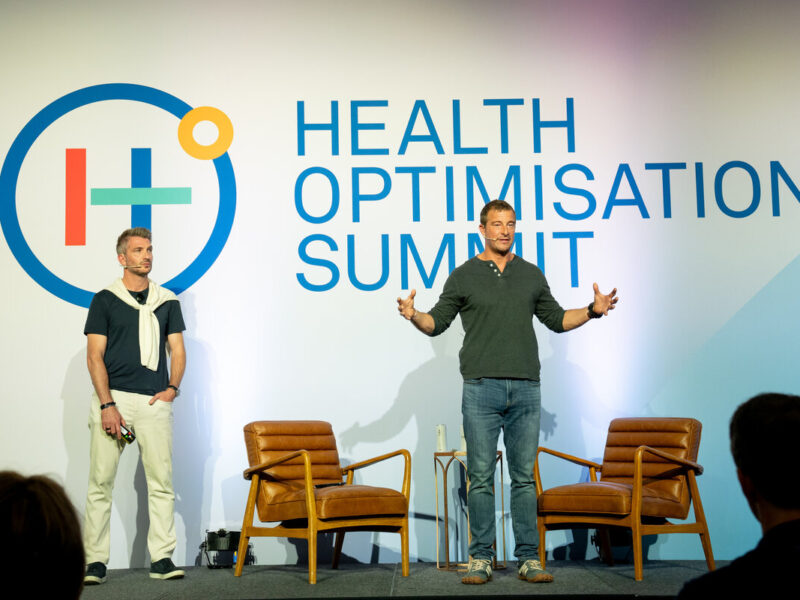
After attending this year’s Health Optimisation Summit at London’s Business Design Centre, it’s easy to understand why founder Tim Gray has turned the event into one of the most anticipated gatherings in the health and wellbeing calendar. What started as a biohacking movement has evolved into a global community of health-conscious individuals, practitioners, entrepreneurs and researchers, all united by a common goal: helping people take greater ownership of their health by empowering them with knowledge.
With chronic illness on the rise and the disturbing statistic of 1 in 2 people developing cancer within their lifetime, many of us want to know why, and what we can do to improve our chances for maintaining or returning to optimum health. Even with so many biological and environmental factors out of our control, there is still so much we CAN do, and this is what unites so many of the optimistic health-minded people attending this incredible event.
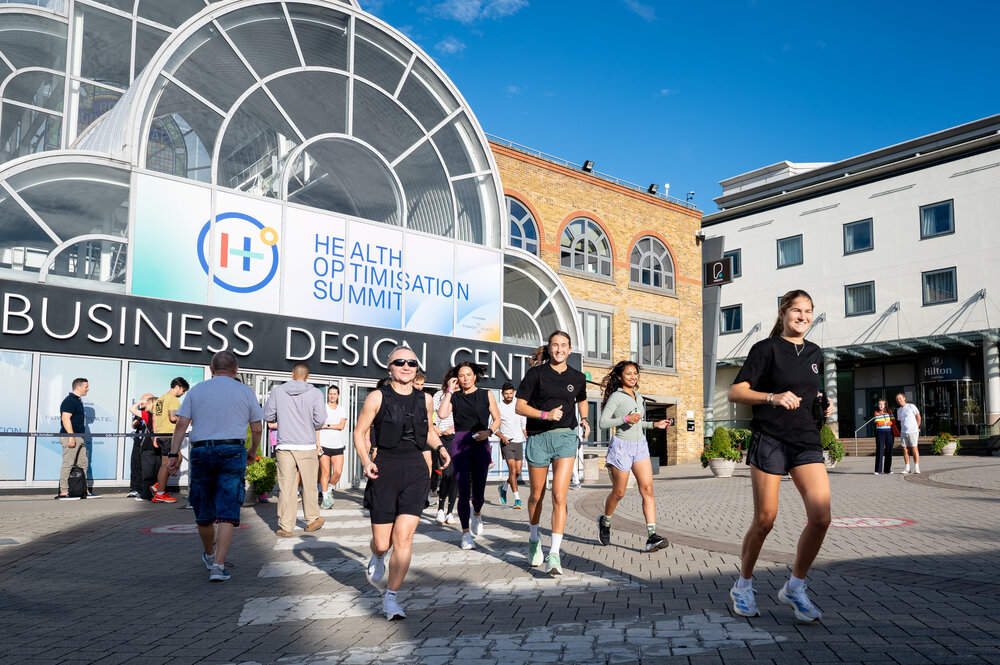
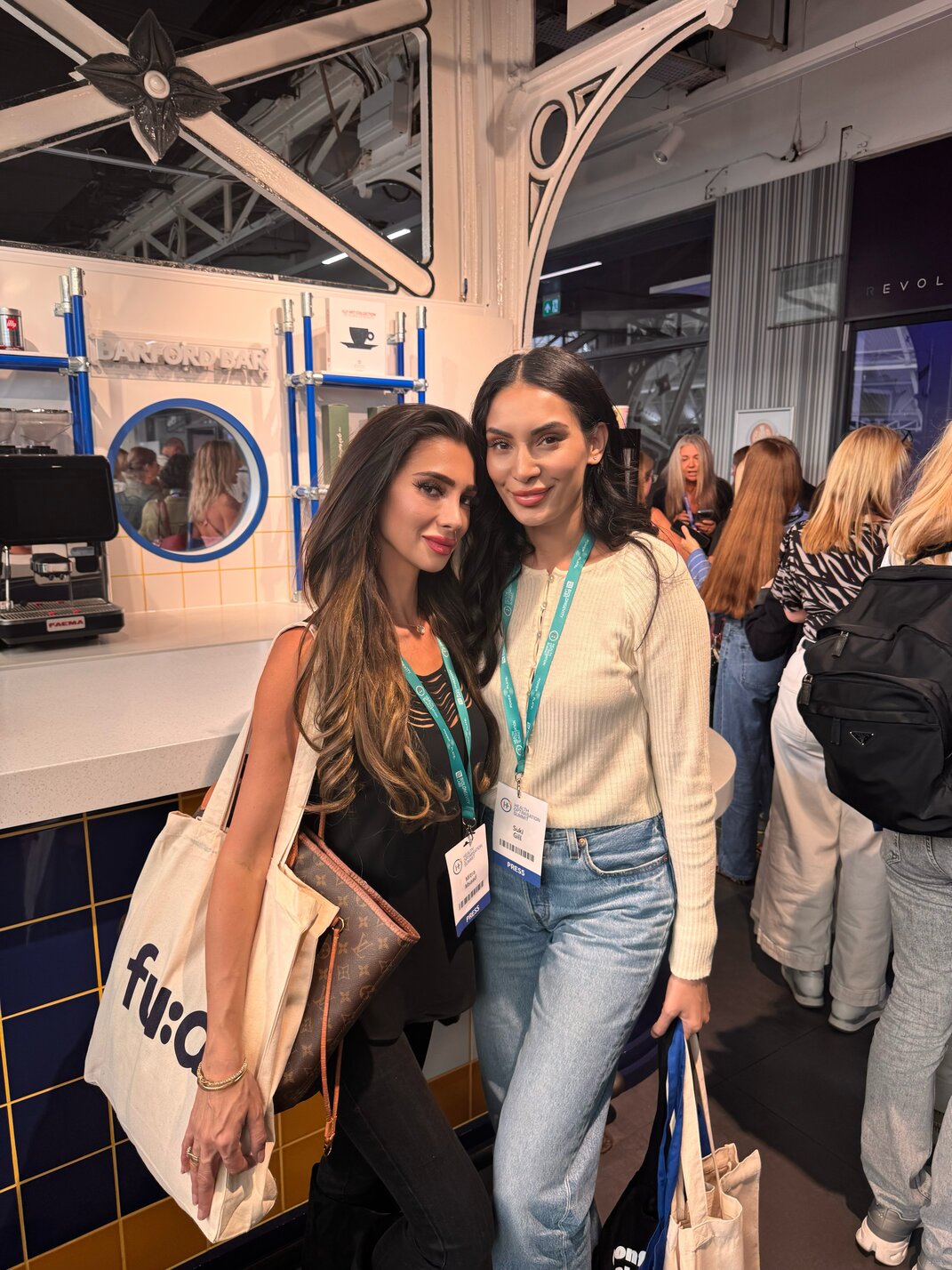
Having attended with my fellow health-minded mama friend Suki Gill, the atmosphere felt electric from the moment we arrived. The summit brought together more than 4,000 attendees alongside world-renowned speakers, pioneering brands and some of the biggest names in longevity, nutrition, performance and wellness.
As we squeezed past crowds of people queuing to get into another insightful, expert talk, it reminded me of the crowd-heavy raves and festivals I used to attend pre-motherhood. Except now these people weren’t staring at me with oversized pupils and swaying to the latest deep house/hip hop tune (which I still love obviously). They were there to learn about feeling good enough in their bodies to enjoy life as long as they could.
I started to understand why so many Gen Z’ers were shunning booze and embracing matcha lattes when in my day we used to binge drink five nights a week for fun followed by a KFC zinger burger (still miss those badboys damnit). Health optimisation is the new Debaucherous Raving, and I’m here for it, and the odd debaucherous rave because everything in moderation of course.
Whilst headline speakers such as Wim Hof, Bear Grylls and Ben Greenfield drew huge crowds, it was the practical, evidence-based sessions that left the biggest mark on me.
Women’s Health Finally Gets the Attention It Deserves
One of the most valuable sessions of the weekend was the Female Longevity Expert Panel: What Works for Women, Not Men, featuring Angela Foster, Liz Earle, Dr Louise Newson and Rose Ferguson.
The discussion tackled a major issue within health and longevity research: much of the science we rely upon has historically been conducted on men. The panel explored how fasting, exercise programmes, recovery strategies and supplementation often require a completely different approach for women.
Particularly insightful was the conversation around hormones and how they influence every aspect of health, from sleep and energy to strength training and metabolic flexibility. Rather than following generic biohacking advice, the speakers emphasised the importance of understanding female physiology at different stages of life and adapting health strategies accordingly.
For many women in the audience, it felt like a long-overdue correction to a one-size-fits-all wellness culture.
The Sleep Session Everyone Needed
Another standout presentation was Oli Patrick’s session, How to Engineer the Perfect Night’s Sleep.
Despite the vast amount of sleep data now available through wearable devices, Patrick argued that many people still fail to understand the most important variable affecting sleep quality: temperature.
His presentation highlighted how the body needs to cool in order to access deeper stages of sleep and recovery. From bedroom temperature to bedding materials and evening routines, he provided practical advice that attendees could implement immediately.
One of the strongest messages, which was echoed elsewhere throughout the summit including by Liz Earle, was the importance of circadian rhythm alignment. Morning sunlight exposure was repeatedly highlighted as one of the simplest and most effective ways to regulate the body’s internal clock. Getting outside shortly after waking helps signal to the brain that the day has begun, supporting better hormone regulation and improved sleep that evening.
Equally important was the recommendation to avoid screens for approximately two hours before bed. The blue light emitted from phones, tablets and televisions can interfere with melatonin production and delay sleep onset, ultimately affecting recovery, mood and cognitive performance.
For me, this was one of the most actionable takeaways from the entire event.
When Neuroscience Meets Spirituality
My favourite talk of the summit was undoubtedly Dr Tara Swart’s fascinating keynote, Science Explains Spirituality: The Neuroscience Behind Intuition and the Senses Beyond the Five.
In a room packed with curious listeners, Swart challenged the common assumption that intuition sits outside the realm of science. Instead, she presented compelling arguments that our intuition may be rooted in complex neurological processes that occur below conscious awareness.
What made the session so captivating was her ability to bridge neuroscience with concepts such as awe, beauty, perception and human potential without slipping into pseudoscience. She encouraged the audience to remain open-minded while still applying critical thinking.
The way Dr Tara talks is truly mesmerising, especially when she explained what she calls “The art of noticing” – people who notice the beauty in this world (a sunset, golden leaves on an autumnal tree) tend to live longer. People who regularly attend theatre or visit art exhibitions and adore creativity increase their lifespan also.
It’s so easy to get caught up in ensuring we have the perfect diet, the most non toxic home or body products and forget to simply enjoy life. Regular stress is detrimental to our overall health, where regular connection with good people and uplifting experiences add so many more years to our life. We only have to look at the blue zones and how long older sociable people live there to understand this.
The talk provided a refreshing reminder that science does not always remove mystery from life. Sometimes it helps us understand it more deeply.
Looking Beyond Food
Several sessions explored the growing awareness that health is influenced by far more than diet alone.
Shreya Vohora’s presentation on creating a less toxic home environment highlighted hidden exposures that may exist in modern living spaces, from indoor air quality and synthetic materials to lighting and environmental stressors.
Similarly, Adam Parker’s detoxification talk examined what he described as the “Four Body Burdens” and offered practical lifestyle strategies designed to reduce overall toxic load through nutrition, movement, natural light exposure and recovery practices.
The theme running throughout both talks was clear: health optimisation extends far beyond what appears on our plate.
This message also emerged during the panel discussion Fixing Britain’s Food System. The speakers challenged many mainstream nutritional assumptions and encouraged greater scrutiny of food labelling and ultra-processed products.
A particularly lively audience discussion centred around the Government’s planned folic acid fortification programme and concerns raised by some speakers regarding individuals with MTHFR gene variants and the potential implications of unmetabolised folic acid. The conversation sparked considerable debate among attendees and reflected the summit’s willingness to tackle complex and sometimes controversial health topics.
Discovering the Best Brands
Beyond the speaker programme, the exhibition hall proved equally exciting.
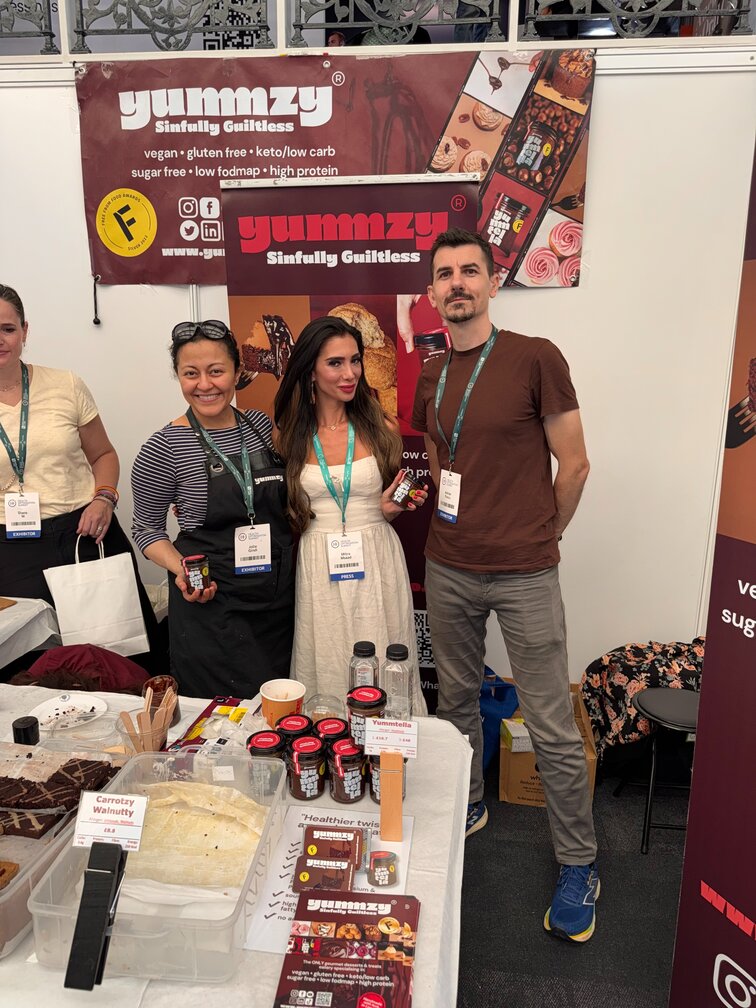
I was particularly delighted to see Yummzy, a brand I have personally supported for more than a decade. Their low-carb, keto and vegan baked goods remain among the best available and continue to prove that healthier alternatives do not have to compromise on taste.
My Top 10 HOS Exhibition Brands
Yummzy
Yummzy was one of the highlights of the exhibition for me, not least because it is a brand I have supported for well over a decade. Long before keto and low-carb products became mainstream, Yummzy was creating genuinely delicious baked goods that catered to people looking for healthier choices. Their range is low carb, keto-friendly, gluten-free, sugar-free and largely vegan, yet somehow still manages to feel indulgent. Their famous cakes, cupcakes and Yummtella spread continue to prove that functional food does not have to feel restrictive. [yummzy.co.uk]
Functional Future
Functional Future impressed me with its commitment to quality and transparency. The brand specialises in nutrient-dense whole-food supplements and functional foods, including organic bone broth collagen, beef liver capsules, organ blends and extra virgin olive oil. What stood out was its emphasis on minimal processing, traceable sourcing and independent third-party testing. In a supplement market often dominated by marketing claims, Functional Future’s food-first philosophy felt refreshingly authentic and aligned with many of the principles discussed throughout the summit. [functional…ture.co.uk]
SU FIRE NUTS
Snack foods are rarely exciting at a health event, but SU FIRE NUTS were a notable exception. These organic, sprouted nuts are seasoned with Ayurvedic spices including chilli, cumin, cinnamon and turmeric, creating an unusually satisfying combination of flavour and nutrition. Free from preservatives, oils and added sugars, they embody the summit’s theme of returning to real, minimally processed foods. They quickly became one of my favourite exhibition discoveries and provided the perfect nutrient-dense snack between talks. You can tell these low carb snacks were made from real love and passion for optimum health. [sufirenuts.com]
Good Measure Keto Baking Mixes
Good Measure’s keto baking mixes demonstrated just how far healthier baking has come in recent years. Designed to make low-carbohydrate baking simple and accessible, the range offers an easy way for people to recreate favourite baked treats without relying on refined flour or sugar. What appealed to me most was the practicality. Not everyone has the time to create keto recipes from scratch, and Good Measure helps bridge that gap by providing convenient mixes that support a lower-carb lifestyle without sacrificing enjoyment. (website coming soon…)
fu:di
Few brands captured the summit’s focus on metabolic health quite as effectively as fu:di. Their mission is simple: improve metabolic health through everyday foods. The company reimagines familiar products by removing added sugars, reducing carbohydrates and replacing seed oils with alternative ingredients. From low-carb crispbreads and protein-rich baked goods to healthier condiments and sauces, their products are crafted by chefs and backed by nutritional science. It’s exactly the kind of practical innovation that helps people make better choices without feeling deprived. [wearefudi.com]
Mason’s Meats Beef Brisket
As someone who values quality animal protein, Mason’s Meats immediately caught my attention. Their grass-fed beef brisket jerky is remarkably simple: premium grass-fed beef and natural sea salt. Nothing else. The brisket itself is prized for its rich flavour and natural marbling, creating a buttery, savoury texture that sets it apart from conventional jerky products. In a world of ultra-processed protein snacks, Mason’s approach felt like a welcome return to real food. [masonsmeats.co.uk]
Ossa Tallow Potato Crisps
One of the most talked-about products I came across was Ossa’s Tallow Potato Crisps. Made with just three ingredients, potatoes, organic grass-fed beef tallow and natural sea salt, they offer an alternative to conventional crisps cooked in industrial seed oils. Hand-cooked using traditional methods, they deliver a rich flavour and impressive crunch while embracing the ancestral nutrition principles that featured heavily throughout the summit. They are proof that even a simple snack can spark interesting conversations about food quality and ingredients. [ossaorganic.com]
Oryx Desert Salt
Oryx Desert Salt has developed something of a cult following among health-conscious consumers (including me!), and it’s easy to see why. Harvested from an ancient underground salt source in the Kalahari Desert, the salt is sun-dried, unrefined and free from additives, anti-caking agents and most importantly, microplastics (unlike sea salt). Beyond its clean mineral profile, I was particularly drawn to the company’s commitment to sustainability, refillable packaging and community projects that support local Kalahari communities. I also love their ceramic and glass girders especially, because most salt and pepper grinders have plastic grinding mechanisms which sprinkle an unwelcome dose of even more microplastics onto your food. You only need to do some basic research on microplastics know to know how detrimental they are for your overall health. The salt of the (health) gods! [oryxdesertsalt.com]
Block Blue Light Glasses
Following so many discussions about circadian rhythms, sleep quality and evening light exposure, I found myself naturally gravitating towards the Block Blue Light stand. Their glasses are designed to filter artificial blue light from screens and LED lighting, helping to support natural melatonin production during the evening. After hearing both Liz Earle and Oli Patrick stress the importance of protecting sleep architecture, these felt less like a wellness accessory and more like a practical tool for modern living. [blockbluelight.co.uk]
Exhale Coffee
Exhale Coffee perfectly reflected the summit’s growing interest in food quality rather than simply nutrient quantity. The company sources speciality-grade organic coffee, roasts in small batches and independently tests every batch for moulds and mycotoxins. I don’t buy everything organic but coffee is a must as it’s the most highly sprayed crop and pesticides are linked to a number of chronic illnesses and overall poor metabolic health. Their emphasis on antioxidant content, ethical sourcing and sustainability has helped build a loyal following among health-conscious coffee drinkers. Most importantly, it tasted exceptional, proving that healthier choices can still deliver a genuinely premium experience. [exhalecoffee.com]
These brands collectively represented what I enjoyed most about the Health Optimisation Summit: practical, real-world solutions that help bridge the gap between health theory and everyday living. Rather than chasing trends, they are addressing fundamental aspects of modern health, from nutrition and sleep to environmental exposures and metabolic wellbeing. I would much rather spend my money on such health optimising fabulousness than products full of toxic ingredients that harm my health and taste rather meh.
Looking Ahead: Austin and Corfu
If this year’s London event is anything to go by, the future of the Health Optimisation Summit looks incredibly exciting. Following the success of its UK editions, the summit made a hugely successful debut in Austin, Texas, attracting a global audience of health leaders, innovators and high-performance enthusiasts. Building on that momentum, the next US edition will return from 2-4 April 2027, promising an even bigger programme of world-class speakers, cutting-edge technology and thought-provoking discussions. For anyone who feels they’ve outgrown conventional wellness advice and wants to be at the forefront of the health optimisation movement, Austin is already shaping up to be one of the most anticipated health events on the calendar.
For those seeking something more immersive, the Health Optimisation Summit’s exclusive Corfu Retreat offers a completely different experience. Set against the breathtaking backdrop of the Greek island, the retreat combines expert-led education with personalised protocols, recovery therapies and hands-on longevity practices in a far more intimate setting. Rather than racing between stages and exhibition stands, attendees have the opportunity to fully embody the principles of health optimisation while connecting with leading experts and like-minded individuals. After experiencing the energy of the London Summit, a few days dedicated entirely to recovery, performance and wellbeing in the Mediterranean sunshine sounds like the ultimate next step.
More than anything, the Health Optimisation Summit succeeds because it encourages curiosity. Rather than promoting a single health philosophy, it brings together diverse perspectives across longevity, nutrition, neuroscience, recovery, fitness and environmental health.
I left with pages of notes, practical lifestyle changes to implement immediately and several new brands to explore. Most importantly, I left inspired. Alongside Suki, surrounded by thousands of people genuinely invested in improving their health, it was impossible not to feel optimistic about the future of wellness.
If this year’s summit proved anything, it is that evidence based health optimisation is no longer a niche, hippytastic interest. It’s rapidly becoming a movement backed by some serious science and I can’t wait to return.

