
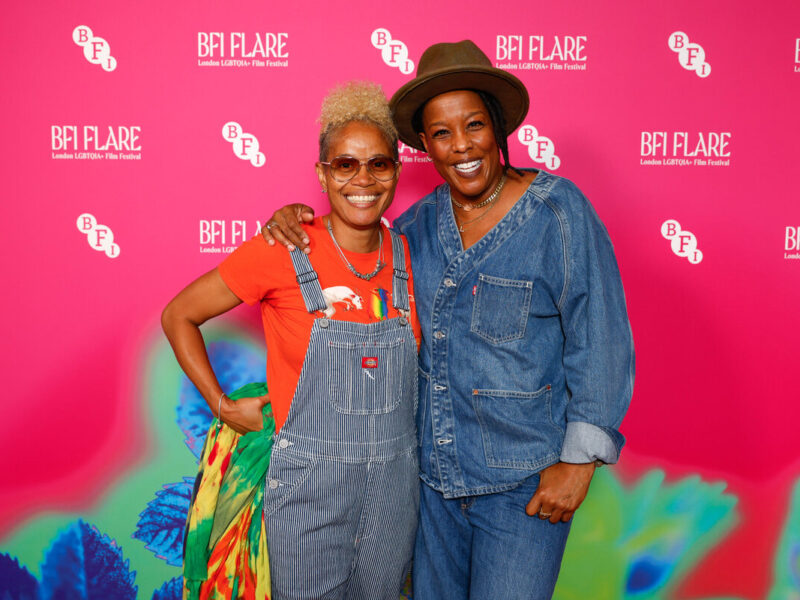
The 39th edition of BFI Flare felt like a festival stretching confidently into its maturity—bigger, warmer, more assured, and more globally connected than ever. Spending nearly two weeks at BFI Southbank, moving between packed screenings, late‑night conversations in the foyer, and the occasional dash for a coffee between events, I felt the pulse of a festival that knows exactly what it stands for: community, discovery, and the thrill of queer cinema at its most expansive.
The festival’s tone was set immediately with the International Premiere of Andrew Ahn’s The Wedding Banquet, a contemporary reimagining of Ang Lee’s 1993 classic. Seeing Ahn, James Schamus, Bowen Yang, Lily Gladstone, Kelly Marie Tran, Han Gi‑Chan, and Joan Chen walk onstage together was a moment of pure electricity. The film itself is tender, funny, and surprisingly introspective—Ahn leans into the emotional architecture of the original while giving it a distinctly modern queer sensibility. Watching it with a sold‑out audience—92% occupancy across the festival, we later learned—felt like being part of a collective exhale. Half the audience were first‑timers, and you could feel that sense of discovery in the room.
This year’s Flare screened 56 features, 81 shorts, and one series from 41 countries, with 34 world premieres and filmmakers from 28 nations in attendance. That global presence was palpable. You’d exit a screening and immediately find yourself in conversation with a director from Buenos Aires, a producer from Nairobi, or a first‑time writer from Seoul. It’s one of the rare festivals where the industry feels porous—where filmmakers and audiences mingle without hierarchy.
The Films That Stayed With Me
Among the world premieres, a few titles lingered long after the credits:
- SUMMER’S CAMERA — Divine Sung’s dreamy coming‑of‑age story is as delicate as it is visually lush. The teenage protagonist’s first crush unfolds with a softness that made the audience collectively lean forward.
- A NIGHT LIKE THIS — Liam Calvert’s London‑set debut is a warm, surprising two‑hander that captures the strange intimacy of a single night shared between strangers. Alexander Lincoln and Jack Brett‑Anderson have a chemistry that feels lived‑in.
- HOW TO LIVE — Njoroge Muthoni’s documentary about Nairobi’s ballroom scene is a joyous, affirming portrait of queer African life. The screening ended with one of the longest applause breaks of the festival.
- A FEW FEET AWAY — Tadeo Pestaña Caro’s Buenos Aires comedy‑drama about hookup culture is sharp, funny, and unexpectedly moving.
One of the films I found myself thinking about most was Hot Milk—not a premiere, but part of the festival’s The Makers series. Having read the book years ago, I was curious (and slightly nervous) to see how Rebecca Lenkiewicz would translate its simmering emotional tension to the screen. The adaptation is bold, sensual, and psychologically precise. Lenkiewicz spoke in her Makers session about writing “from the body outward,” and that ethos is everywhere in the film: sun‑bleached landscapes, tactile close‑ups, and performances that feel almost too intimate to watch. Seeing her discuss the process afterward—how she approached the novel’s interiority, how she worked with actors to build that sense of heat and unease—was one of the festival’s standout moments for me.
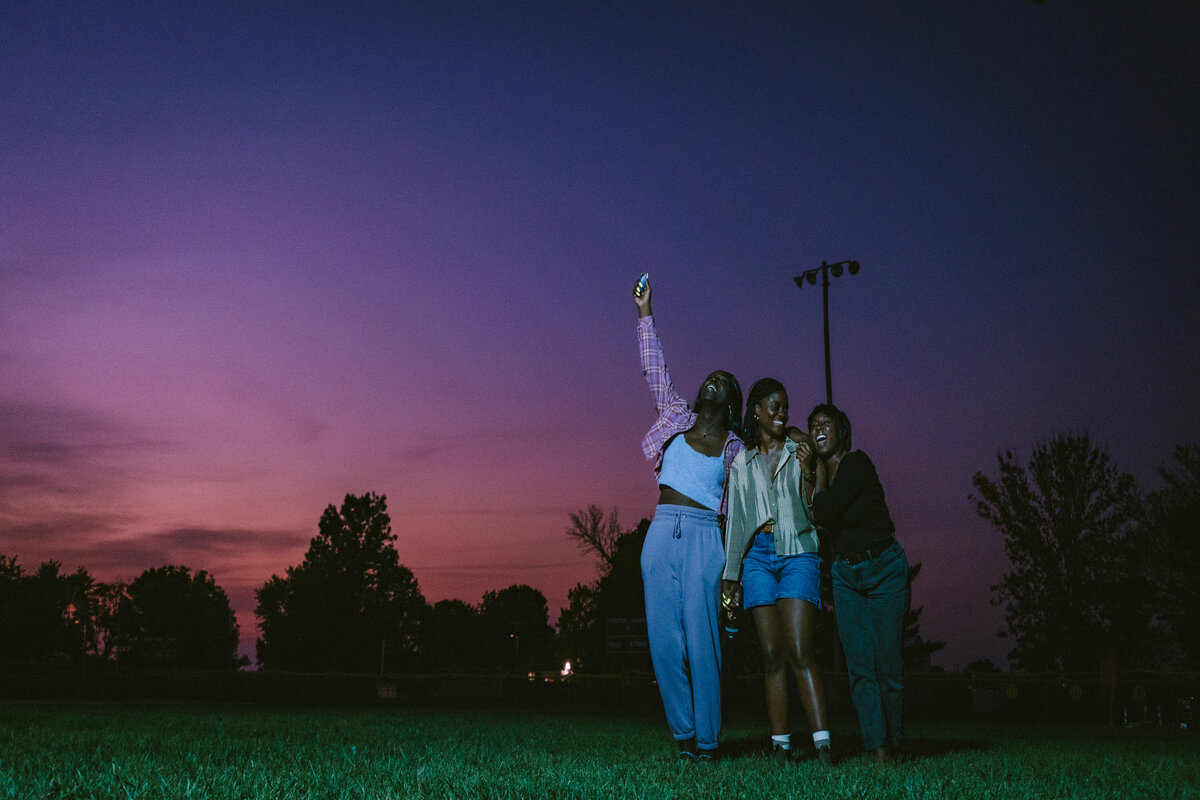
Another standout for me was Shatara Michelle Ford’s Dreams in Nightmares, presented as this year’s Special Presentation. Watching it in NFT1 felt like slipping into a quiet, contemplative pocket of the festival—a road movie that resists the genre’s usual expansiveness and instead turns inward. The film follows three Black queer femmes in their mid‑30s as they drive across the Midwest searching for a friend who has seemingly vanished, but Ford is far less interested in the mechanics of the mystery than in the emotional weather systems inside these women. The long stretches of highway, the motel rooms, the silences between them—they all become spaces where identity, friendship, and desire are renegotiated. What struck me most was the film’s patience: Ford allows conversations to unfold with the kind of unhurried honesty that only comes from deep trust between characters and filmmaker. By the time the credits rolled, it felt less like I’d watched a disappearance and more like I’d witnessed three women finding themselves in the cracks left behind.
Bowen Yang’s Screen Talk with Matt Rogers was another highlight. It was funny, yes—how could it not be—but also unexpectedly reflective. Yang spoke about the responsibility of queer visibility, the craft of comedy, and the strange, exhilarating experience of moving between indie film sets and mainstream television. The audience adored him, and the conversation felt like a reminder of how Flare nurtures not just films but the people who make them.
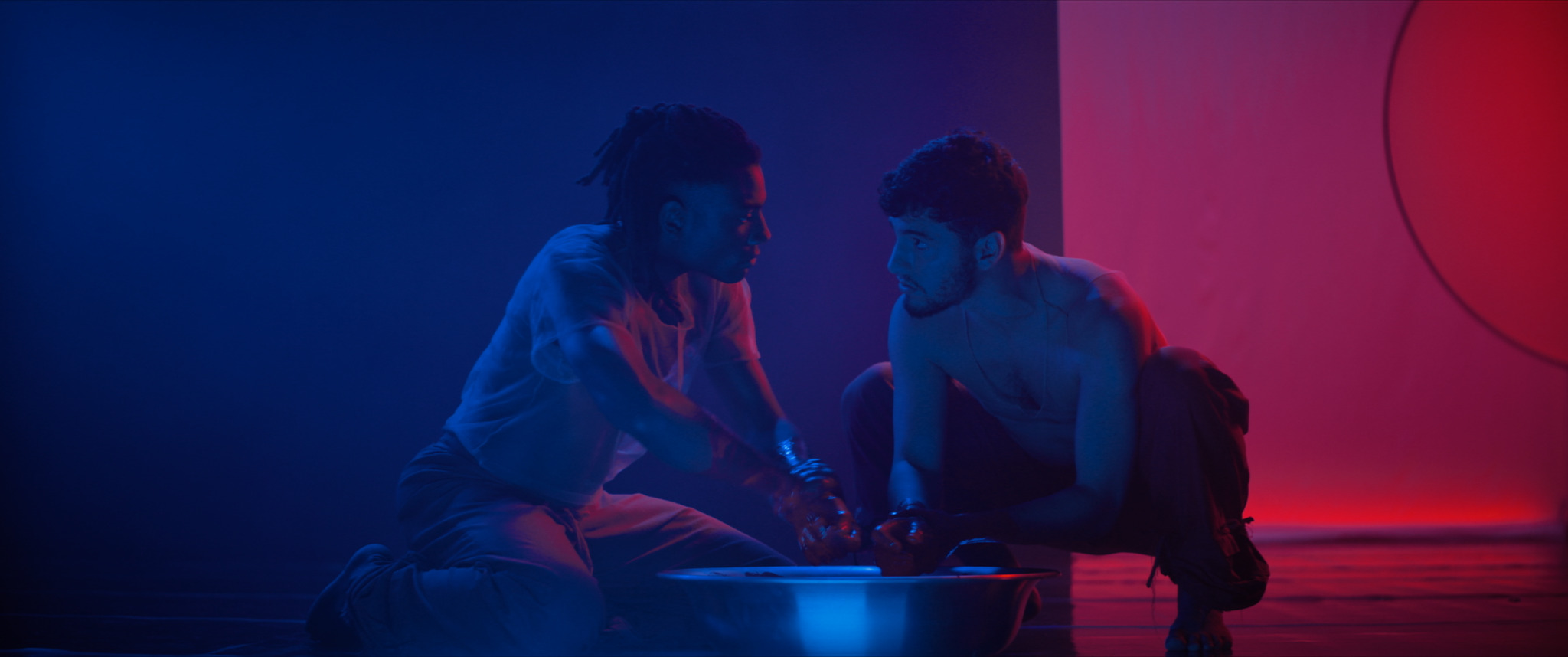
The festival closed with the UK Premiere of Night Stage, the latest from Filipe Matzembacher and Marcio Reolon. It’s an erotic thriller with a slow, hypnotic burn—moody, stylish, and emotionally charged. Watching it in a room full of festival‑weary but exhilarated attendees felt like the perfect ending: a film that invites you to sit in ambiguity, desire, and tension.
Flare’s events programme was unusually rich this year. Queering the Square: 40 Years of EastEnders was a nostalgic delight, while For Us, By Us: A History of Black Queer Women’s Cinema was a vital, overdue conversation. The industry programme—panels on funding, programming, music supervision, and more—felt genuinely useful rather than perfunctory. And the #FiveFilmsForFreedom initiative continued its global reach, surpassing 2.2 million views and reminding us that queer cinema is not just entertainment but solidarity.
What struck me most this year was the sense of expansion—not just in numbers, though attendance rose 6%, but in ambition. Flare feels increasingly like a hub for global queer filmmaking, a place where emerging voices meet established ones, where stories from Nairobi, Seoul, Buenos Aires, and London sit side by side.
Leaving the Southbank on the final night, the river glittering and the festival banners fluttering in the wind, I felt that familiar mix of exhaustion and exhilaration. BFI Flare 2025 wasn’t just a festival—it was a reminder of the power of queer storytelling to connect, challenge, and transform.
Featured image: Staceyann and Zuri Chin, A Mother Apart

